
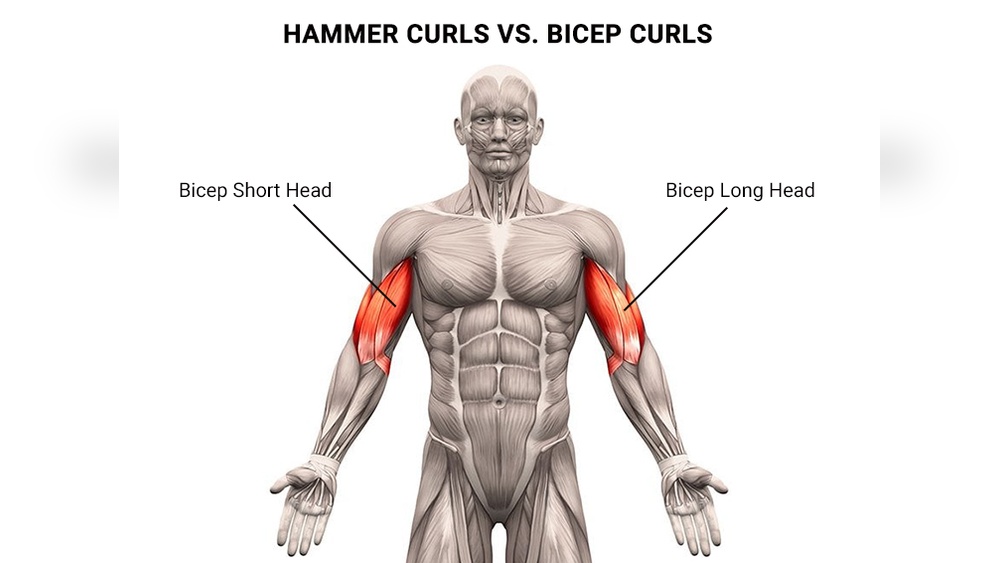
Are you looking to build stronger, more defined arms but can’t decide between hammer curls and regular curls? You’re not alone.
Both exercises target your biceps, but they work your muscles in different ways. Choosing the right curl can make a big difference in your results. Keep reading to discover which curl suits your goals best and how to get the most out of every rep.
Your arms will thank you.
Table of Contents
Muscle Focus In Hammer Curls
Hammer curls focus on different muscles than regular curls. They target the arm in a unique way. This makes hammer curls a useful addition to arm workouts.
The grip position changes the muscle activation. Hammer curls use a neutral grip, with palms facing each other. This grip hits the muscles on the outer arm more.
Targeting The Brachialis Muscle
The brachialis lies underneath the biceps. It helps lift the arm by bending the elbow. Hammer curls activate this muscle more than regular curls. Building the brachialis adds size and strength to the upper arm.
Engaging The Biceps Brachii
The biceps brachii is the main muscle in the front of the arm. It has two heads: long and short. Hammer curls work the biceps but less than regular curls. The neutral grip shifts some effort to other muscles.
Strengthening The Brachioradialis
The brachioradialis runs along the forearm. It helps with elbow flexion and wrist movement. Hammer curls hit this muscle hard. This improves forearm strength and grip power.
Muscle Focus In Regular Curls
Regular curls mainly target the biceps brachii muscle. This muscle is the large one on the front of your upper arm. It has two heads: the long head and the short head. Both heads work together during regular curls.
These curls help build the size and strength of the biceps. The movement also activates the brachialis muscle underneath the biceps. This helps give the arm a fuller look.
Activation Of The Biceps Brachii
The biceps brachii is the main muscle worked in regular curls. It helps bend the elbow and rotate the forearm. Regular curls emphasize this muscle by using a supinated grip. This means your palms face up during the lift.
Role Of The Brachialis Muscle
The brachialis lies beneath the biceps. It assists in bending the elbow. Regular curls engage this muscle to support the biceps. Strong brachialis muscles push the biceps up, improving arm shape.
Forearm Muscle Engagement
Regular curls also work the forearm muscles. These muscles help with grip and wrist stability. Keeping a firm grip during curls activates the forearm muscles. This adds strength and control to your lifts.
Grip Variations And Their Effects
Grip style changes how muscles work during curls. It affects which parts of your arm get the most effort. Small changes in hand position can shift focus from one muscle to another. This helps target specific areas for better growth and strength.
Different grips also change how comfortable the exercise feels. Some grips reduce wrist strain and improve control. Others increase muscle tension for a tougher workout.
Hammer Curl Grip
The hammer curl uses a neutral grip. Your palms face each other throughout the move. This grip targets the brachialis muscle under the biceps. It also works the brachioradialis in the forearm.
This grip helps build arm thickness. It puts less pressure on the wrist. Many find hammer curls easier to do with heavy weights.
Regular Curl Grip
Regular curls use a supinated grip. Your palms face up during the lift. This grip mainly works the biceps brachii muscle.
This grip creates a strong biceps peak. It puts more stress on the wrist and elbow. Some may feel discomfort with heavy weights.
Effect On Muscle Activation
Neutral grip in hammer curls activates forearm muscles more. Supinated grip in regular curls focuses on the biceps peak. Choosing a grip changes muscle growth emphasis. Mixing both grips can improve overall arm strength.

<<Get Amazon For This Product>>
Credit: peteandpedro.com
Range Of Motion Differences
The range of motion differs between hammer curls and regular curls. This difference affects which muscles get worked and how the arm moves. Understanding these variations helps choose the best exercise for your goals.
Range Of Motion In Regular Curls
Regular curls use a supinated grip, meaning palms face up. This grip allows a full curl motion from arms straight to fully bent. The biceps brachii muscle gets the most stretch and contraction.
The movement mainly occurs at the elbow joint. The forearm moves up and down in a smooth arc. This wide range helps build the peak of the biceps.
Range Of Motion In Hammer Curls
Hammer curls use a neutral grip, with palms facing each other. This keeps the wrist in a straight position during the lift. The curl motion is slightly different and more limited compared to regular curls.
The forearm moves up but does not rotate much. The focus shifts to the brachialis muscle under the biceps. This smaller range targets the arm’s width and forearm strength.
Impact Of Range Of Motion On Muscle Activation
Regular curls stretch the biceps more fully, promoting muscle peak growth. Hammer curls emphasize the brachialis and brachioradialis, adding arm thickness. Both moves have value depending on your training focus.
Different motion ranges also change joint stress. Regular curls put more strain on the wrist and elbow. Hammer curls reduce wrist strain by keeping a neutral grip.
Strength Gains Comparison
Hammer curls target the forearms and brachialis muscle, helping improve overall arm strength. Regular curls focus more on the biceps, building size and peak shape. Both exercises contribute to strength but in slightly different ways.
Muscle Activation Differences
Hammer curls and regular curls target muscles differently. Hammer curls focus on the brachialis muscle, which lies beneath the biceps. This muscle helps increase arm thickness and strength. Regular curls mainly work the biceps brachii, the visible muscle on the front of the arm. Activating different muscles affects overall strength gains.
Impact On Strength Development
Hammer curls allow lifting heavier weights due to wrist position. The neutral grip reduces strain on the wrists and elbows. This grip helps build forearm and grip strength. Regular curls emphasize biceps peak and definition. They may limit weight used because of wrist supination. Both exercises contribute to strength but in unique ways.
Long-term Strength Benefits
Incorporating hammer curls can improve overall arm strength. They support balanced muscle growth by working smaller muscles. Regular curls help increase biceps size and strength. Combining both exercises leads to better muscle symmetry. This mix reduces injury risk and improves lifting ability.

<<Get Amazon For This Product>>
Credit: www.bodybuildingmealplan.com
Impact On Forearm Development
The forearms play a key role in many daily activities and sports. Building strong forearms improves grip strength and hand control. Both hammer curls and regular curls help develop the forearms. Yet, they target different muscles and give varied results.
Hammer Curls Target The Brachioradialis
Hammer curls focus on the brachioradialis muscle. This muscle lies on the outer part of the forearm. It helps bend the elbow and rotate the wrist. Hammer curls use a neutral grip, which activates this muscle more.
Stronger brachioradialis improves lifting and gripping power. It also adds thickness to the upper forearm. Regular curls do not engage this muscle as much. That makes hammer curls better for forearm size and strength.
Regular Curls Focus On The Biceps Brachii
Regular curls mainly target the biceps brachii. This muscle is on the front of the upper arm. It helps bend the elbow and rotate the palm upward. The grip in regular curls is supinated, or palm up.
This grip reduces forearm muscle activation. Regular curls build the biceps more than the forearm. Forearm development happens only as a secondary effect. So, regular curls are less effective for thick forearms.
Forearm Muscle Engagement Differences
Hammer curls keep the wrist in a neutral position. This activates both the brachioradialis and forearm flexors. Regular curls keep the wrist supinated. This places more focus on the biceps and less on forearms.
Hammer curls create balanced arm strength. They target muscles that regular curls miss. Adding hammer curls to your workout boosts forearm endurance and grip. This makes daily tasks and lifts easier.
Common Mistakes To Avoid
Choosing between hammer curls and regular curls can be tricky. Mistakes during these exercises can slow progress or cause injury. Recognizing common errors helps keep your workout safe and effective. The focus should stay on form and controlled movement.
Improper Wrist Position
Many lifters let their wrists bend during curls. This puts stress on joints and reduces muscle work. Keep wrists straight and firm throughout the lift. It protects the wrist and targets the right muscles.
Using Too Much Weight
Heavy weights often lead to cheating with body sway or momentum. This lowers the workout’s quality and risks injury. Choose a weight you can lift with control and steady pace. Quality beats quantity in arm training.
Incomplete Range Of Motion
Some stop curling too early or do not fully lower the dumbbells. Partial reps limit muscle growth and strength gains. Curl fully up and lower down slowly. Full motion activates the entire muscle.
Neglecting Elbow Stability
Allowing elbows to move forward or flare out reduces exercise effectiveness. Keep elbows close to the body and steady. This focuses the effort on the biceps and forearms.
Rushing The Reps
Speeding through curls cuts muscle time under tension. Controlled, slower reps increase muscle activation and growth. Focus on smooth, deliberate movements for best results.

<<Get Amazon For This Product>>
Credit: peteandpedro.com
Workout Integration Tips
Integrating hammer curls and regular curls into your workout can boost arm strength and shape. Both exercises target the biceps but work muscles in slightly different ways. This section offers tips on adding them effectively to your routine.
Balancing Hammer Curls And Regular Curls
Include both exercises to hit the biceps from different angles. Start with regular curls to focus on the main bicep muscle. Follow with hammer curls to target the brachialis and forearms. This balance helps build stronger, well-rounded arms.
Choosing Sets And Reps
Use moderate weights for 3 to 4 sets of 8 to 12 reps. Keep your form strict to avoid injury. Adjust weights based on your strength and progress. You can alternate exercises each workout or combine both in one session.
Timing In Your Workout
Perform curls after compound lifts like pull-ups or rows. Your muscles will be warmed up and ready. Avoid curling first, as it may tire your arms early. Save curls for the middle or end of your arm workout.
Rest And Recovery
Allow at least 48 hours before working the same muscles again. This rest time helps muscles grow and recover. Stretch your arms gently after workouts to reduce tightness. Proper recovery prevents injury and improves results.
Choosing The Right Curl For You
Selecting the best curl exercise depends on your fitness goals and body type.
Both hammer curls and regular curls target your biceps but work muscles differently.
Understanding these differences helps you pick the right move for better results.
Muscle Focus And Benefits
Regular curls mainly target the biceps brachii, the front muscle of the arm.
Hammer curls work the brachialis and brachioradialis muscles too.
Hammer curls add thickness to the upper arm and improve grip strength.
Ease And Comfort
Regular curls use a supinated grip, which may feel natural for many.
Hammer curls use a neutral grip, often easier on the wrists and elbows.
Choose the curl that feels comfortable and causes no pain during exercise.
Goals And Training Style
Pick regular curls to build the classic bicep peak and arm shape.
Hammer curls suit those wanting stronger forearms and a fuller arm look.
Mix both curls to balance muscle strength and size for overall arm growth.
FAQ: Hammer Curls Vs Regular Curls
What Muscles Do Hammer Curls Target Compared To Regular Curls?
Hammer curls mainly work the brachialis and brachioradialis muscles. Regular curls focus more on the biceps brachii. This difference changes your arm’s shape and strength.
Are Hammer Curls Better For Arm Size Than Regular Curls?
Hammer curls help add thickness to your upper arms by targeting deeper muscles. Regular curls build the peak of the biceps. Both exercises together improve overall arm size.
Which Curl Variation Is Easier On The Wrists?
Hammer curls keep your wrists in a neutral position, reducing strain. Regular curls can cause wrist discomfort for some people. Choose the curl that feels more comfortable for you.
Can Hammer Curls Improve Grip Strength More Than Regular Curls?
Yes, hammer curls engage the forearm muscles more, which boosts grip strength. Regular curls focus less on the forearms. Stronger grip helps in many daily tasks and exercises.
How Should Beginners Choose Between Hammer And Regular Curls?
Beginners should try both to see which feels better and less painful. Mixing both curls gives balanced arm development. Start with light weights and focus on form.
Conclusion
Hammer curls and regular curls both build strong arms. Hammer curls focus more on the forearms and outer biceps. Regular curls target the front biceps muscle more directly. Choose the curl that fits your workout goals best. You can also mix both for balanced arm strength.
Consistency and good form matter most for muscle growth. Try each type and see how your arms respond. Keep lifting and enjoy your progress.