
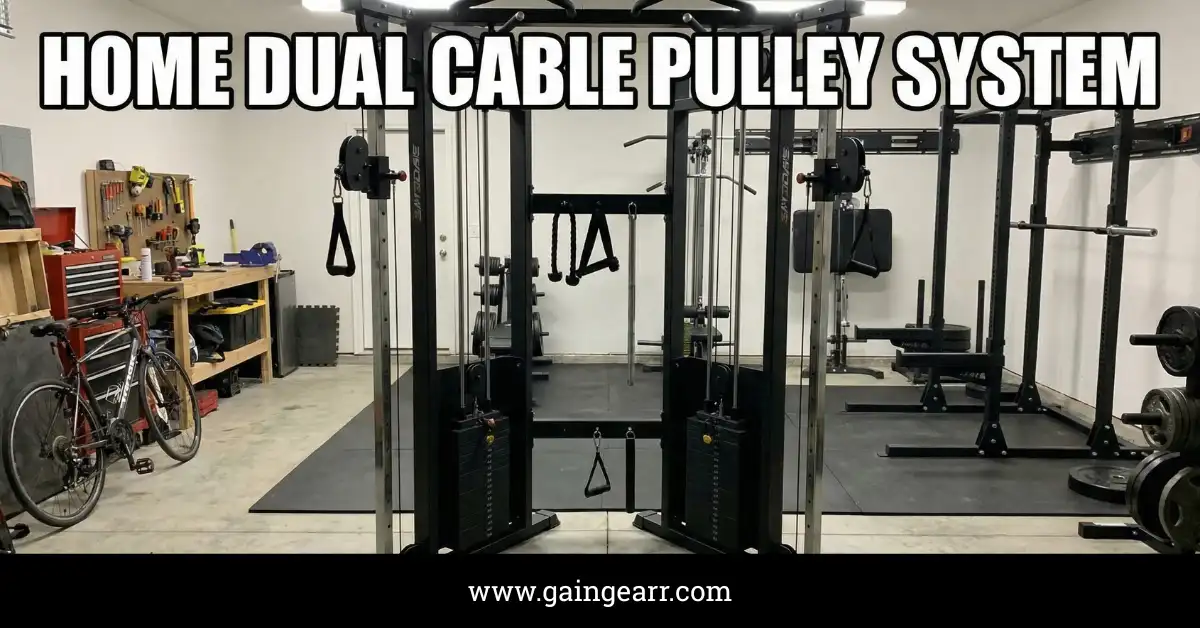
It was a rainy Tuesday night in November. I walked into my garage to lift weights. The air was cold, and I could see my breath. I looked at my power rack and my barbell. I felt bored. I love heavy lifting, but my joints were aching. I wanted to do something different. I wanted to feel a good muscle stretch without the heavy load of a metal bar on my back. I realized my home gym had a big gap. I had plenty of heavy iron, but I had no smooth motion. I needed a cable machine.
That night kicked off a two-month obsessed search. I wanted to find the perfect home dual cable pulley system. I did not want to join a commercial gym again. I wanted that smooth, gliding feeling right next to my lawnmower. If you are reading this, you are likely in the same boat. You want to know if these big machines are worth the money. You want to know if they fit in a normal house. I am here to share my story. I made mistakes so you do not have to. Here is what I learned about adding cables to a home setup.
Table of Contents
Why I Needed More Than Just Weights
For years, I only used free weights. I thought barbells were all I needed. But I noticed something was missing. When I did a dumbbell fly, I felt tension at the bottom. But at the top? Nothing. The weight just sat there. Gravity pulls down, not across. This is where a cable system changes the game. It provides tension during the whole move.
I also missed doing face pulls. My shoulders hurt from too much bench pressing. My physical therapist told me to pull things toward my face to fix my posture. You can use bands, but they snap. They also have uneven resistance. A pulley system is smooth. It feels like butter. I knew that if I wanted to lift well into my 40s and 50s, I needed to change how I trained. I needed options that were easier on my joints but hard on my muscles.
The Different Types of Cable Setups
I quickly found out that not all machines are the same. The market is full of choices. It was overwhelming at first. I sat with my coffee and made a list. I found three main styles. Each one has pros and cons. I had to measure my floor space three times just to be sure.
There are wall-mounted units, rack attachments, and big standalone trainers. Wall units save space but need a strong wall. Rack attachments save money but crowd your cage. The standalone unit is the king, but it is huge. I had to decide what mattered most. Was it space? Was it cost? Or was it the quality of the workout?
Here is a simple breakdown of what I found during my research.
Comparing Cable System Styles
| Type | Space Needed | Cost Estimate | Setup Difficulty | Best For |
|---|---|---|---|---|
| Wall-Mounted | Very Low | $200 – $500 | High (Drilling) | Small rooms |
| Rack Attachment | Low | $300 – $800 | Medium | Rack owners |
| Standalone | High | $1,500 – $3,000 | Medium | Garage gyms |
My First Mistake: The DIY Route
I want to be honest with you. I tried to be cheap at first. I did not want to spend a thousand dollars. So, I bought a simple pulley kit online for fifty bucks. It came with a loading pin and a rope. I hung it from my pull-up bar. I thought I was smart. I loaded some plates on the pin and tried to do a tricep pushdown.
It was a disaster. The weights swung back and forth like a pendulum. The loading pin hit my shin and left a bruise. The motion was jerky. It did not feel like the gym. It felt like I was fighting a swinging rock. I tried to set up a second pulley to make it a “dual” system. The ropes got tangled. I spent more time fixing the setup than lifting.
After two weeks, I took it down. It was better than nothing, but barely. If you are serious about training, the cheap DIY method might annoy you. It surely annoyed me. I realized that a real home dual cable pulley system is expensive for a reason. You pay for the stability. You pay for the guide rods that keep the weight straight.
Choosing the Right Machine
I decided to invest in a real machine. I looked at the specs. There was one term I saw everywhere. It was “Pulley Ratio.” This confused me. Some machines said 1:1 ratio. Others said 2:1 ratio. I had to dig deep to understand this.
A 2:1 ratio means if you pick 100 pounds, it feels like 50 pounds. This sounds bad, right? You want to lift heavy. But for cables, 2:1 is actually better. It gives you more cable length. You can walk further away from the machine. The motion is faster and smoother. A 1:1 ratio is good for heavy lat pulldowns, but the cable is often too short for other moves. I chose a machine with a 2:1 ratio. I wanted to do lunges and twists. I needed that extra cable length.
Weight Stacks vs. Plate Loaded
The next big choice was the weight source. You can buy machines that use weight stacks. These have a pin you move to change weight. Or you can buy machines that take plates. You hang your own weights on them.
I chose the weight stack version. I know myself. If I have to load and unload plates between every set, I will be lazy. I will not change the weight. The pin system is fast. It takes two seconds. It makes drop sets easy. It cost me more money, but it saved me time. Time is valuable when you have a job and kids.
The Big Day: Delivery and Assembly
The delivery truck arrived on a Friday. The driver looked annoyed. He dropped off a massive wooden crate in my driveway. It weighed nearly 700 pounds. I looked at the box and felt a mix of joy and fear. I had to move this thing into my garage.
I opened the crate. There were hundreds of pieces. Bolts, nuts, washers, and cables were everywhere. I grabbed my socket wrench and a cold drink. I put on some music. It took me six hours to build. I am not handy, so it might take you less time. The hardest part was routing the cables. You have to weave them through the pulleys in a specific order. I messed it up once and had to redo it.
But once it was done, it looked beautiful. It stood tall in the corner. The black powder coat looked sleek. I wiped off the grease from my hands. I was ready to test it out.
My Favorite Moves on the Machine
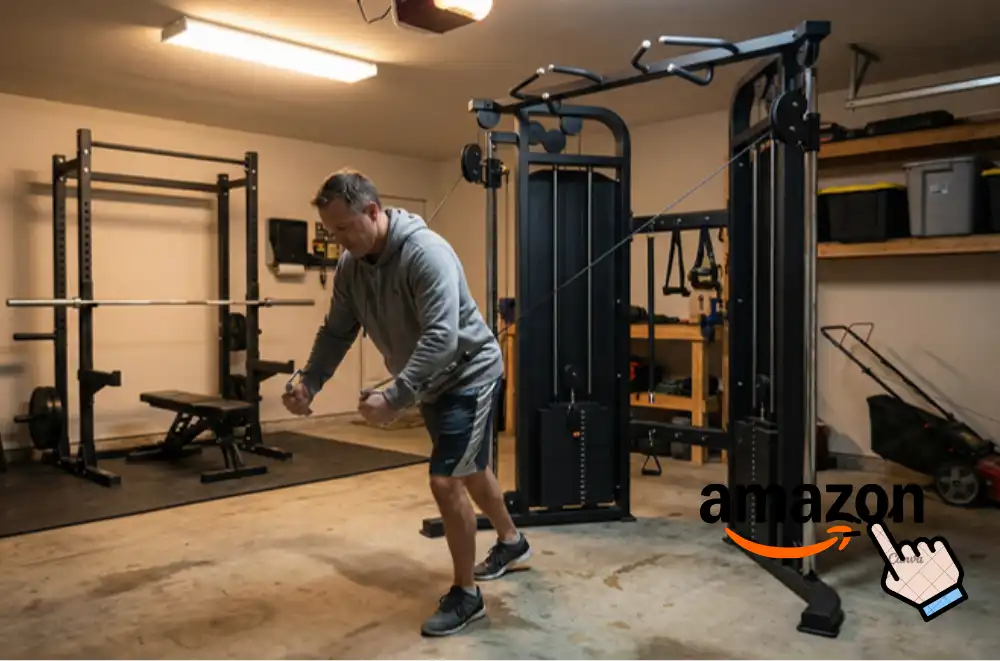
The first workout was amazing. I grabbed the handles. I pulled them down. The motion was silent and smooth. It felt just like the commercial gym I used to go to. I felt a rush of happiness. I finally had the tool I needed.
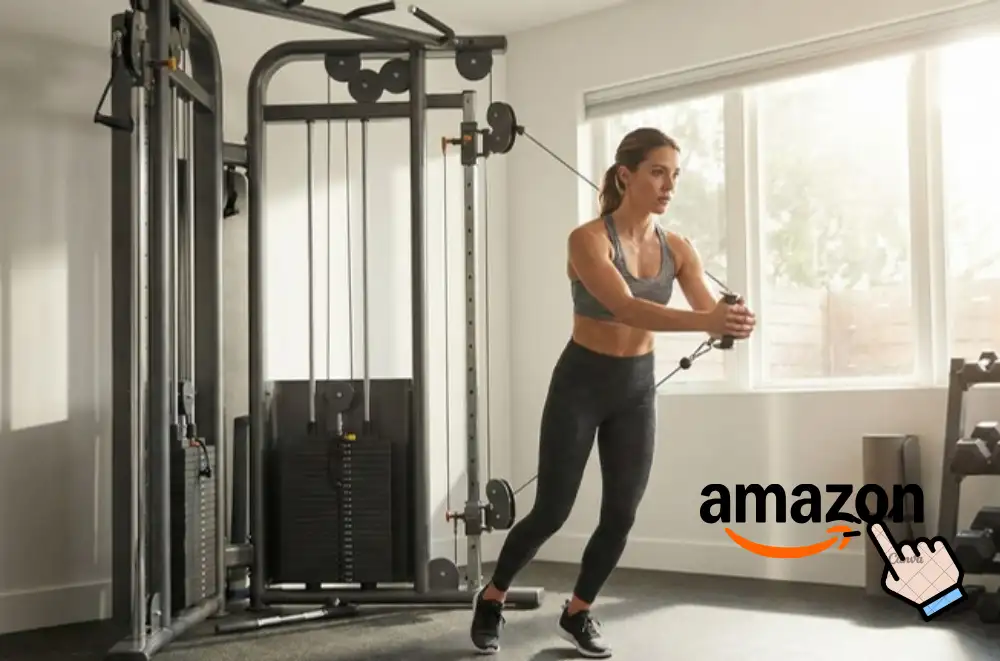
I started with a chest fly. I set the pulleys high. I pulled the handles down and together. I squeezed my chest. The tension was perfect. Then I moved the pulleys to the bottom. I did bicep curls. I could stand in the middle and curl both arms at once. My arms were on fire.
Here are the moves I do almost every week now. This machine opened up so many new exercises for me.
Go-To Cable Exercises
| Muscle Group | Exercise Name | Why I Love It |
|---|---|---|
| Rear Delts | Face Pulls | Fixes my shoulder pain. |
| Chest | Low Cable Fly | Great pump, no shoulder stress. |
| Triceps | Overhead Extension | Constant stretch on the muscle. |
| Abs | Cable Crunch | Better than sit-ups. |
| Legs | Glute Kickback | Hard to do with just weights. |
The Downsides No One Tells You
I want to keep this real. I love my machine, but it is not perfect. There are things you should know before you buy. First, it takes up a lot of space. It is wide. It dominates the room. If you have a small garage, it might be tight. I had to move my bike storage to the shed to make room.
Second, there is maintenance. You have to clean the guide rods. If they get dusty, the weight stack gets sticky. It feels scratchy when you pull. I have to wipe them with silicone spray once a month. It is not hard, but it is a chore.
Third, the cost is high. I spent over two thousand dollars. That is a lot of money. You can buy a nice used car for that price. You have to really use it to make it worth it. If it becomes a clothes hanger, it is a waste.
Is It Worth the Cost?
It has been six months since I bought my home dual cable pulley system. I use it four times a week. I calculated the cost per use. If I use it for five years, it costs me about a dollar per workout. That is cheaper than a gym membership.
But beyond the money, the value is in the feeling. I enjoy my workouts more. I do not dread training. I can do small isolation moves that make my joints feel good. My shoulders are healthier than they have been in years. The variety keeps me fresh.
If you have the space and the budget, I think it is the best upgrade for a home gym. A rack and barbell are essential. But the cables are the luxury that makes training fun. It bridges the gap between a hardcore powerlifting gym and a polished health club.
Final Thoughts
If you are looking for a home dual cable pulley system, take your time. Measure your ceiling height. Some of these machines are very tall. My friend bought one and it hit his garage door opener. He had to cut the legs of the machine. Do not be that guy. Measure twice.
Think about how you train. If you love heavy, low reps, maybe you do not need this. If you like bodybuilding or want to move without pain, this is for you. Do not rush the decision. Read reviews. Look at the warranty.
For me, the investment paid off. I walk into my garage now and I have zero excuses. I have everything I need to build muscle and stay fit. The rain can pour outside, but inside, I am making gains. And that feeling is worth every penny.
FAQ: Home Dual Cable Pulley System
How much space does a home dual cable pulley system need?
Most units need a floor area of about 4 by 6 feet. Check your ceiling height first, as a home dual cable pulley system is often over 80 inches tall.
What is the difference between a 2:1 and 1:1 pulley ratio?
A 2:1 ratio makes 100 pounds feel like 50 pounds. This helps your home dual cable pulley system feel smoother and allows for longer cable travel.
Do I need to clean or oil the guide rods?
Yes, wipe the chrome rods with a clean rag to remove dust. Use silicone spray on your home dual cable pulley system to keep the glide smooth.
Should I choose weight stacks or plate-loaded cables?
Plate-loaded units save money but take time to load. A weight stack home dual cable pulley system costs more but lets you change weight very fast.
Is a DIY pulley setup as good as a full machine?
DIY rope kits are cheap but often swing too much. A solid home dual cable pulley system provides the stability and safety you need for heavy use.