
I remember the exact moment I realized I was training wrong. I had been going to the gym for six months. I never missed a “back day.” I pulled heavy weights. I grunted. I sweated. I thought I was doing everything right. Then, I saw a photo of myself at the beach. My back looked exactly the same as when I started.
It was frustrating. I felt like I was wasting my time. I realized that moving weight from point A to point B was not enough. I was using my arms, my momentum, and my ego. I was not using my lats.
I decided to strip the weight off. I started over from scratch. It was humbling. But it was the best decision I ever made for my physique. Over the next year, I learned the nuances of the movement. My back finally started to grow.
Here is my personal guide to the lat pulldown. These are the specific lat pulldown form tips that fixed my posture and built my width.
Table of Contents
Why the Lat Pulldown Matters to Me
The lat pulldown is special. It is one of the few exercises where you can safely overload the back muscles. Pull-ups are great, but they are hard. I could only do one or two when I started. The pulldown machine let me build volume.
It also helped my shoulder health. I work at a desk all day. My shoulders tend to roll forward. Learning to depress my scapula—that means pulling the shoulder blades down—fixed my slouch. I stand taller now. I feel more confident.
But the machine is tricky. It looks simple. You just sit and pull, right? That is what I thought. I was wrong. The devil is in the details.

The Setup: It Starts Before You Pull
Most of my mistakes happened before I even touched the bar. I used to rush the setup. I would jump in, grab the handle, and go. This is a recipe for failure. If your body is not locked in, you cannot generate force.
Locking Down the Thigh Pad
The thigh pad is your anchor. I used to leave it loose. There was a gap between my legs and the pad. This was a huge mistake.
When the weight gets heavy, the weight stack wants to pull you up. If you are not locked down, your butt lifts off the seat. You lose leverage. You lose power.
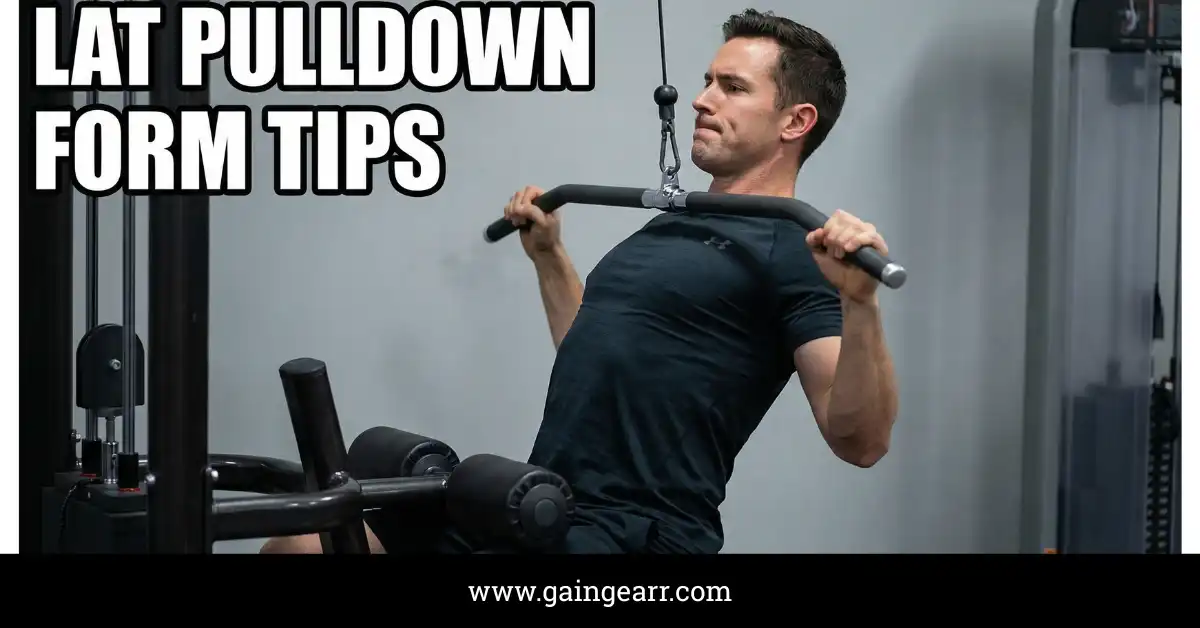
Now, I jam that pad down hard. I want it tight against my quads. My feet stay flat on the floor. I drive my heels into the ground. I feel like I am glued to the seat. This creates a stable base. It lets me focus purely on the pull.
Finding My Grip Width
I used to grab the very ends of the bar. I thought a wider grip meant a wider back. It turns out, that is a myth.
When I grabbed too wide, my range of motion suffered. I couldn’t bring my elbows down far enough. My shoulders felt “crunchy.” It didn’t feel good.
I experimented with different widths. I found my sweet spot. It is just outside of shoulder width. This feels natural for me. It allows my elbows to drop straight down. It feels strong.
The “Hook” Grip Discovery
This was the biggest game-changer for me. I used to wrap my thumb under the bar. I squeezed the life out of the handle.
This caused my forearms to fail first. My grip would give out before my back did. I felt the burn in my arms, not my lats.
I switched to a thumbless grip. I place my thumb over the top of the bar. It rests next to my index finger. My hand acts like a hook.
It feels weird at first. You might feel like the bar will slip. But once you get used to it, it is magic. It disengages the biceps. It forces the back to do the work.

The Pull How I Learned to Engage the Lats
Once I fixed my setup, I had to relearn the movement. I had to stop pulling with my hands.
The Shoulder Blade Shift
I used to start the pull by bending my elbows. This is incorrect. The movement must start at the shoulder blade.
I visualize “un-shrugging” my shoulders. Before I bend my arms, I pull my shoulders down away from my ears. I feel my scapula slide down my ribcage.
This initiates the movement with the lats. It sets the tension in the right place. If you skip this, your traps and arms take over.
Driving With the Elbows
This is my favorite cue. I stop thinking about the bar. I imagine there are strings attached to my elbows. I pull those strings down to the floor.
I try to drive my elbows into my back pockets. This keeps the path of motion vertical. It prevents my elbows from flaring back.
When I focus on my elbows, the bar just follows. It becomes a secondary thought. The contraction in my back becomes intense.
The Chest Position
I used to hunch over the bar. I looked like a turtle. This rolls the shoulders forward. It kills the lat activation.
Now, I keep a “proud chest.” I puff my chest out towards the bar. I lean back just a tiny bit. Maybe 10 or 15 degrees.
I lock this position in. I do not rock back and forth. I keep my spine rigid. I bring the bar to my chest, not my chest to the bar.

The Release Controlling the Negative
I used to let the weight stack crash down. I thought the rep was over once the bar hit my chest. I was missing half the gains.
The way up is just as important as the way down. This is called the eccentric phase. This is where muscle damage happens. That sounds bad, but it is good for growth.
I slow it down. I count to three in my head. One, two, three. I fight the gravity. I feel the tension stretching my lats.
The Full Stretch
At the top of the rep, I let my arms go all the way up. I let my shoulders rise a little bit. I feel a deep stretch in my armpits.
This stretch is uncomfortable. It burns. But I learned to love it. That stretch under load triggers growth. Do not cut the rep short. Go all the way up.
My Data-Centric Approach to Progress
I love numbers. I track everything. I used to guess, but guessing leads to stalling. I created a simple system to ensure I was actually getting stronger.
I don’t just track the weight. I track the quality of the reps. I use a strict tempo guide.
My Tempo and Rep Strategy Table
This is the actual framework I use for my back workouts.
| Variable | My Target | Why I Do It |
|---|---|---|
| Rep Range | 10–15 Reps | Lats respond well to higher volume and pump. |
| Tempo | 3-1-1 | 3 seconds up, 1 second squeeze, 1 second down. |
| Rest Time | 90 Seconds | Enough time to recover grip strength. |
| Sets | 3 to 4 | High quality sets are better than junk volume. |
| Progression | +2.5 lbs | Small jumps keep form strict. |
I stick to this table religiously. If I cannot perform the “3 seconds up” tempo, I do not count the rep. It keeps me honest. It stops me from cheating.
Troubleshooting Pain and Problems
It wasn’t smooth sailing. I had aches and pains along the way. I had to learn how to fix them.
Dealing with Forearm Pain
My forearms used to scream in pain. Even with the hook grip, they would cramp.
I bought a pair of lifting straps. Some people say straps are “cheating.” I disagree. My goal is to build my back, not my grip.
Using straps allowed me to take my hands completely out of the equation. I could focus 100% on my lats. If your grip is the limiting factor, buy straps. They are cheap and effective.
Shoulder Clicking
I developed a clicking sound in my right shoulder. It was annoying. It turned out I was pulling my elbows too far back.
I was trying to touch the bar to my stomach. This forced my shoulder to rotate internally. It pinched the joint.
I adjusted my target. I pull the bar to my collarbone now. I stop when my elbows are in line with my body. The clicking went away instantly.
Mental Cues That Changed the Game
I am a visual learner. Telling me to “contract the latissimus dorsi” means nothing to me. I need a mental image. Here are the three visualizations that work best for me.
The Orange Squeeze
I pretend there is an orange stuck in my armpit. When I pull down, I try to crush that orange. I want to squeeze all the juice out.
This cue keeps my arms tight to my body. It forces a hard contraction at the bottom of the rep.
Breaking the Bar
As I hold the bar, I try to snap it in half. I apply pressure as if I am bending the ends toward the floor.
This engages the muscles around my rotator cuff. It stabilizes my shoulder. It puts me in a strong position before I even start pulling.
The Elbow String
I imagine a string tied to my elbow pulling straight down. My hands are just dead weight. They are just hooks. The power comes from the string.
Mistakes That Held Me Back
I wish I could go back in time and warn myself about these errors. They wasted months of my training time.
The “Behind the Neck” Myth
I saw old-school bodybuilders pulling the bar behind their necks. It looked cool. I tried it.
It felt awful. I had to crane my neck forward. It put my shoulders in a vulnerable position. I did some research and found out it offers no real benefit. It just increases injury risk.
I stopped doing it immediately. Pulling to the front is safer. It allows for more weight. It hits the muscles just as hard.
Using Too Much Momentum
I have a bit of an ego. I wanted to use the whole stack. To move that weight, I had to swing my body like a pendulum.
I was using my lower back to generate force. My lats were barely working. I was just tiring myself out.
I had to drop the weight. I cut it in half. It hurt my pride. But I promised myself I would not swing. I kept my torso still. The burn in my back was ten times greater with the lighter weight.
Reaching With My Chin
When the rep got hard, I would reach my chin up to get over the bar. This is a bad habit. It strains the neck.
I learned to keep a neutral neck. I look straight ahead. I bring the bar to me. I do not go to the bar.
Equipment That Helped Me
You don’t need fancy gear, but a few things helped.
I mentioned straps already. They are essential for me on heavy days.
I also started using chalk. My gym gets humid. My hands get sweaty. A little bit of liquid chalk keeps my grip secure. It stops the bar from sliding in my fingers.
I also tried different handle attachments. The standard straight bar is fine. But I really like the neutral grip handles. These are the ones where your palms face each other.
The neutral grip feels easier on my shoulders. It hits the lower lats a bit more. I like to rotate between the straight bar and the neutral grip. It keeps things fresh.
My Warm-Up Routine
I never jump straight into my working sets. I treat my back with respect. I do a specific warm-up sequence.
First, I do arm circles. I get the blood flowing in the shoulder joint.
Then, I do “scapular pull-ups.” I hang from a bar. I keep my arms straight. I pull my body up just using my shoulder blades. I do two sets of ten.
This wakes up the lats. It reminds my brain how to initiate the pull.
Then, I do one light set on the lat pulldown. I use about 50% of my working weight. I do 15 reps. I focus on the stretch. I focus on the squeeze.
Only then am I ready to load the heavy weight. This routine has kept me injury-free.
Final Thoughts on My Journey
Building a wide back takes time. It took me a long time to figure out the lat pulldown. I had to unlearn bad habits. I had to leave my ego at the door.
But it was worth it. I love the feeling of a proper rep now. I love the control. I love the pump.
Don’t be discouraged if you don’t feel it right away. It takes practice. Use the cues. Try the thumbless grip. Slow down your reps.
Focus on quality over quantity. Your back will grow. Just keep showing up. Keep refining your form. You will get there. I did, and you can too.
FAQ: Lat Pulldown Form Tips
Do lifting straps help with heavy lat pulldowns?
Yes, straps are a great tool for heavy sets. They take the load off your tired grip. This lets your back muscles work until they are fully done.
Which pull bar is best for my shoulders?
Try the neutral grip bar with palms facing in. It puts less stress on joints than a straight bar. This tool helps you pull without pain.
How do I keep a good grip on a smooth bar?
Sweat makes metal bars slick and hard to hold. Use a bit of liquid chalk to dry your hands. It creates a safe, non-slip surface instantly.
Is the thumbless grip safe for beginners?
Yes, using your hands as “hooks” is safe and smart. It stops your arms from doing all the work. Just keep the weight controlled and steady.
Why do I need to adjust the leg pad?
The pad acts as your anchor to the machine. Lock it down tight on your thighs. This stops your body from lifting up during heavy pulls.