
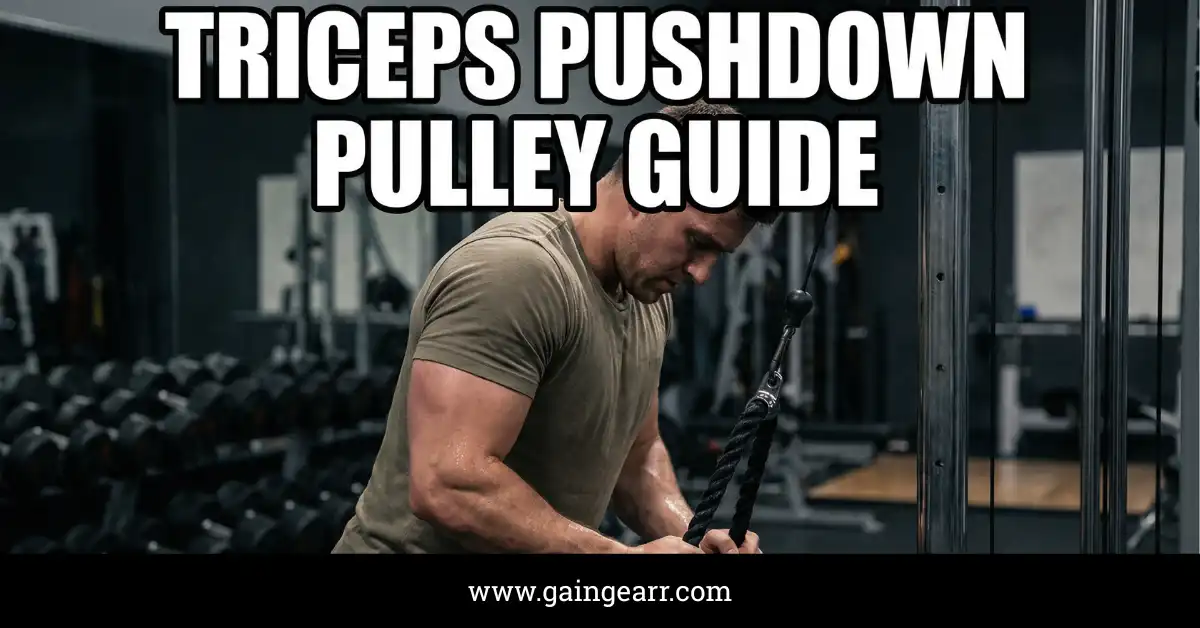
My arms used to be my biggest insecurity. I remember looking in the mirror on a rainy Tuesday after a gym session. I had just finished a heavy chest day. I felt strong, but my arms looked flat. It was frustrating. I was doing all the big lifts. I bench pressed every week. I did overhead presses. But that famous “horseshoe” shape on the back of my arm was missing.
I realized I was missing a key piece of the puzzle. I needed to isolate the muscle. I needed to stop relying only on heavy compound movements. That is when I truly discovered the cable machine. I decided to master the cable pushdown. It changed everything for me. My bench press went up. My sleeves got tighter.
This is my personal guide on how I use this exercise. I want to share the mistakes I made so you can avoid them. I will share the tips that finally helped me grow. This is not a textbook. This is what actually works on the gym floor.
Table of Contents
Why My Arms Would Not Grow
For years, I thought heavy weights were the only answer. I would grab a heavy dumbbell and try to do extensions. It hurt my elbows. My form was terrible. I was using momentum instead of muscle. My triceps were not doing the work. My shoulders and back were taking over.
I learned that the triceps make up about two-thirds of your upper arm. If you want big arms, curls are not enough. You need to focus on the back of the arm. The triceps has three parts, or heads. You have the long head, lateral head, and medial head.
The pushdown is special. It hits the lateral and medial heads very well. These are the parts that make your arm look thick from the side. Once I switched my focus to the pulley system, the results came fast. The constant tension of the cable was the secret.
The Setup: Getting It Right
The setup is more important than the rep itself. If you start wrong, you end wrong. I learned this the hard way after tweaking my lower back. I used to stand too far back. This made me lean too much. Now, I have a specific checklist I go through every time I walk up to the tower.
I start with the pulley height. I set the pulley to the very top position. It needs to be higher than my head. This allows for a full range of motion. If the pulley is too low, you cannot extend your arm fully at the bottom.
Next is my stance. I stand close to the machine. My face is almost touching the cable. I keep my feet shoulder-width apart. Sometimes I stagger my feet. I put one foot slightly in front of the other. This gives me a solid base. I bend my knees slightly. I want to feel athletic and stable.
Engaging the Core
I used to ignore my core during arm day. That was a mistake. You need a strong core to keep your body still. If your body swings, you are cheating. I brace my abs like someone is about to punch me in the stomach.
I lean my torso forward just a little bit. Think about a slight hinge at the hips. This puts my shoulders directly over the handle. It creates the best angle for pushing. It also takes the pressure off my lower back.
My Step-by-Step Execution
Here is exactly how I perform the rep. I grab the handle firmly. I pull it down to the starting position. This is where the work begins. My elbows are the most important part of this puzzle.
I pin my elbows to my ribs. I pretend there is superglue on my sides. My elbows do not move forward. They do not move backward. They act like a hinge on a door. If my elbows leave my sides, I stop the set.
The Push and Squeeze
I push the weight down toward my thighs. I exhale as I push. This helps me generate power. The goal is to fully straighten the arm. I do not stop halfway. I go until my elbows are locked out.
At the bottom, I pause. I hold the weight there for one full second. I squeeze the back of my arm as hard as I can. This squeeze is where the growth happens. It sends blood into the muscle. This creates the “pump” we all chase.
The Slow Return
The way up is just as key as the way down. I release the weight slowly. I fight the cable. I take about two seconds to let the handle come up. This is called the eccentric phase.
I stop when my forearms touch my biceps. My hands are usually at chest level. I do not let the weight stack crash. I keep tension on the cable the whole time. Then, I start the next rep immediately.
The Great Attachment Debate
The cable machine is versatile. You can hook many things to it. I have tried them all. Each one feels different. Some hurt my wrists. Some feel great. I want to break down the differences based on my experience.
I use different attachments for different goals. If I want max weight, I use a bar. If I want a better contraction, I use a rope. It helps to switch them up. It keeps the workout fresh.
Attachment Comparison Guide
| Attachment Type | Comfort Level | Weight Capacity | Primary Benefit |
|---|---|---|---|
| Rope | High | Medium | Best for spreading hands and squeezing at the bottom. |
| Straight Bar | Low | High | Best for moving heavy loads and building raw strength. |
| V-Bar | Medium | High | Good middle ground. easier on wrists than the straight bar. |
| Single Handle | Medium | Low | Great for fixing imbalances between left and right arms. |
Why I Love the Rope
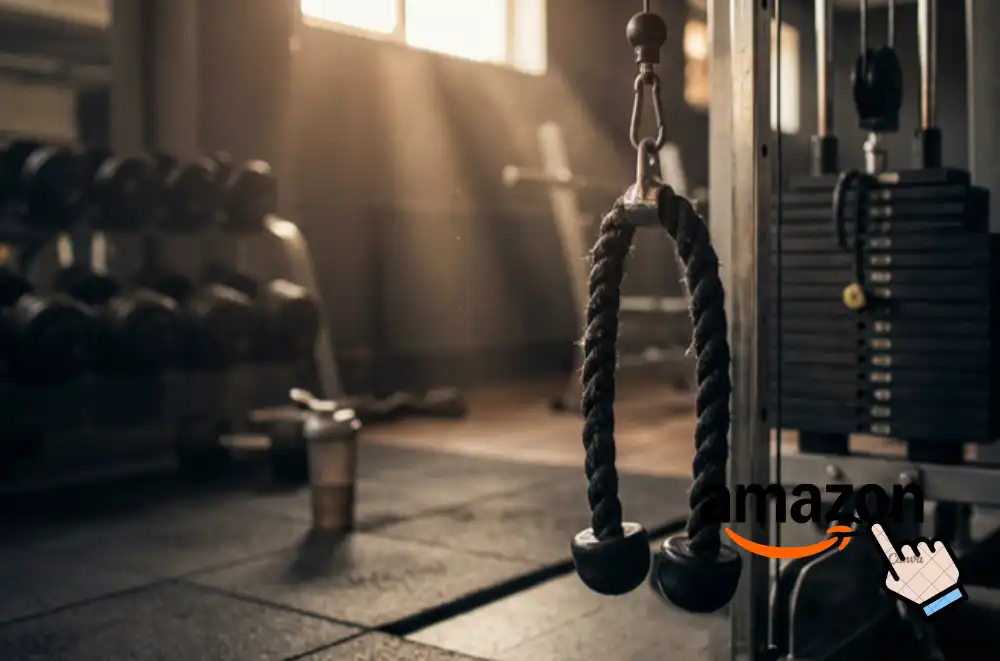
The rope is my favorite tool. It allows my wrists to move naturally. With a bar, my hands are fixed. With the rope, I can twist.
At the bottom of the rep, I pull the rope ends apart. I try to push my hands past my thighs. This creates a crazy burn in the lateral head. That is the outer part of the muscle. It gives the arm that wide look.
When I Use the Straight Bar
I use the straight bar when I want to feel strong. It is solid. I can pile on more plates. I use an overhand grip. My palms face the floor.
The downside is wrist pain. If I go too heavy, my wrists complain. I have to be careful. I keep the bar loose in my fingers. I push with the heel of my hand. This helps reduce the strain.
Common Mistakes I Made (So You Don’t Have To)
I wasted a lot of time doing this wrong. I see people making the same errors every day. It makes me cringe. I want to help you fix them before you develop bad habits.
The Chicken Wing Elbows
This was my biggest flaw. As the weight got heavy, my elbows would flare out. They pointed to the walls. This turns the move into a chest press.
You are trying to isolate the triceps. Keep the elbows tucked tight. If they flare, the weight is too heavy. Drop the weight. Fix your form. Your triceps will thank you.
Using Too Much Body English
I used to rock back and forth. I would use my body weight to push the handle down. It looked like I was doing a crunch. This does nothing for your arms.
Your torso must be a statue. Only your forearms should move. If you have to throw your shoulders into it, you are ego lifting. No one cares how much you lift. They care about how your arms look.
The Half Rep
I see guys doing tiny pulses at the bottom. They never let the weight come up. They miss the stretch. Muscle grows when it is stretched under load.
You must let your hands come up to chest level. Feel the stretch in the back of your arm. Then push down. Full range of motion equals full muscle development.
The Science of the Squeeze
I am not a scientist. But I learned a bit about anatomy. It helps me visualize the muscle working. The triceps has three heads. The pushdown hits them all, but mostly the lateral and medial heads.
The long head crosses the shoulder joint. To hit that, you need to raise your arms overhead. That is why pushdowns are not the only exercise you need. But for the “horseshoe” look, pushdowns are king.
Mind-Muscle Connection
I used to just move weight from A to B. That was average. Now, I focus on the feeling. I close my eyes sometimes. I visualize the muscle fibers contracting.
This is the mind-muscle connection. It sounds silly, but it works. It helps you recruit more muscle fibers. You get more out of every rep. You do not need as much weight when you focus this hard.
My Favorite Routine for Arm Size
I do not train arms every day. That is a recipe for injury. I train triceps twice a week. Once with chest, and once on a dedicated arm day.
I keep the volume high. The triceps respond well to higher reps. They are endurance muscles. They help you all day long. They need a lot of work to get tired.
My Triceps Pushdown Stats
| Parameter | My Target | Why I Do It |
|---|---|---|
| Sets | 3 to 4 | Enough volume to fatigue the muscle without killing it. |
| Reps | 12 to 15 | Keeps the joints safe and maximizes the pump. |
| Rest Time | 45 Seconds | Keeps the intensity high and the blood in the muscle. |
| Tempo | 2-0-1-1 | 2 seconds up, 0 pause, 1 second down, 1 second squeeze. |
Adding Intensity
Sometimes straight sets are boring. I like to spice it up. I use drop sets. I do 10 reps with a heavy weight. Then I drop the pin up one slot. I do 10 more reps immediately.
This sets my arms on fire. It forces every last muscle fiber to fire. I only do this on the last set. It is painful, but effective.
Dealing with Elbow Pain
I developed tendonitis a few years ago. It is also called tennis elbow. It hurt to grip anything. The pushdown can aggravate this if you are not careful.
If I feel pain, I switch attachments. The V-bar is usually the easiest on my joints. I also warm up thoroughly. I never start with my working weight.
My Warm-Up Routine
I do two sets of 20 reps with very light weight. I just want to get the synovial fluid moving. This lubricates the joint. It is like oil in a car engine.
I also stretch my wrists. I pull my fingers back gently. I rotate my wrists in circles. Taking five minutes to warm up saves months of rehab.
Final Thoughts
The triceps pushdown is a staple in my routine. It is simple, safe, and effective. It took my arms from skinny to strong. It did not happen overnight. It took months of consistent work.
I learned to leave my ego at the door. I learned to love the burn. I learned to focus on form over weight. If you follow these steps, you will see changes.
Go to the gym. Find the cable tower. Grab the rope. Pin those elbows. Squeeze hard. Enjoy the process. Your future self will thank you for the effort you put in today.
FAQ : Triceps Pushdown Pulley Guide
Which triceps tool is best for growth?
The rope helps you squeeze the muscle hard at the bottom. A steel bar is better for moving big weight. Swap them often to hit all parts of the arm.
Why does the pulley feel jerky?
The guide rods may need a quick wipe down. Dust builds up and slows the weight stack. Use a dry cloth to clean the metal bars for a smooth glide.
Does a V-bar stop wrist pain?
Yes, the angled grip fits your hand well naturally. It hurts less than a straight flat bar. It lets you press down with more force safely without strain.
Can I rig a pulley system at home?
Yes, you just need a sturdy rack and a loading pin. Hang the pulley high up for the best angle. Check the weight limit on your rig first.
How do I grip the rope correctly?
Hold the rubber ends with a firm, solid grip. Do not let your hands slip up the rope. Keep your wrists straight to protect the joint during the set.